Single regulator plan advances as major education councils set for overhaul
Parliament moves to unify oversight as bodies like UGC, AICTE and NCTE face replacement under new education framework
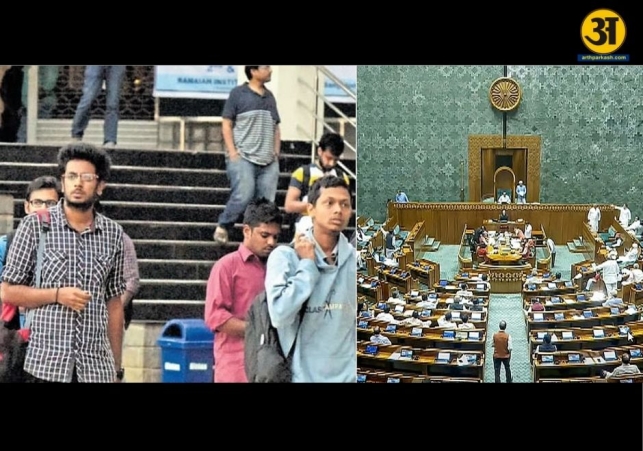
Parliament is preparing to discuss a major reform that could change how higher education is governed across India. When the winter session begins on December 1, the government plans to introduce a new bill that will create one unified regulatory body for higher education. This new framework aims to replace several existing regulators and bring all key functions under one single authority.
The upcoming legislation is officially titled the Higher Education Commission of India Bill. According to the bulletin released by the Lok Sabha, the bill proposes replacing three major regulatory bodies—UGC, AICTE, and NCTE—with one umbrella organisation. This unified regulator is expected to create a more efficient and transparent system for universities and colleges across the country.
The idea of forming a single regulator did not emerge overnight. It was strongly recommended in the National Education Policy (NEP) 2020, which highlighted the need for a simpler and more effective regulatory structure. Over the years, experts and education committees have repeatedly pointed out that multiple regulators often create confusion, delays, and overlapping responsibilities. The HECI Bill represents the government’s attempt to end this fragmentation and establish a smoother and clearer system.
What the new regulator will do
Right now, higher education in India is governed by several bodies, each handling different areas. The UGC looks after non-technical higher education. The AICTE supervises engineering and other technical institutions. Teacher education is regulated by the NCTE. Because each of these organisations works separately, universities and colleges often need to follow multiple sets of rules.
Under the new proposal, the Higher Education Commission of India will bring all these responsibilities under one roof. This combined structure aims to make the regulatory environment clearer and more predictable for educational institutions. The HECI will focus on three important functions: regulating institutions, accrediting them based on standards, and setting professional and academic benchmarks for higher education.
One important point is that this new body will not handle funding. Decisions on funding—such as grants and financial assistance—will remain with the administrative ministry. This separation between regulation and funding is meant to prevent any conflict of interest and to ensure better accountability.
There will also be some exceptions to HECI’s authority. Medical education and legal education will continue to be governed by their own existing regulators. This is because these fields require specialised control due to their professional nature.
Accreditation will be a major part of HECI’s role. Institutions across the country will be evaluated based on their quality of teaching, infrastructure, research output, and student outcomes. Clear standards will help ensure that colleges improve continuously and work toward maintaining quality. With one central authority supervising accreditation, the process is expected to become more uniform and transparent.
ALSO READ: When heart trouble hides: Why major artery blockages often show no symptoms
ALSO READ: What happens if antibiotics stop working: the rising threat of superbugs
How the idea developed over the years
The plan to create a single higher education regulator has been discussed for many years. Back in 2018, the government released the first draft of the Higher Education Commission of India Bill for public feedback. That draft proposed repealing the UGC Act and replacing it with a more modern regulatory framework. Although it did not move forward at the time, it set the stage for deeper discussions and long-term planning.
A fresh push for reform began in 2021, after Dharmendra Pradhan took over as Union Education Minister. Since then, the ministry has been working on giving shape to the framework recommended by NEP-2020. With the new HECI Bill now ready to be introduced in Parliament, the proposal is finally moving toward real implementation.
The National Education Policy 2020 has played a central role in shaping the bill. NEP-2020 called for a complete redesign of the regulatory system. It emphasised that different functions—regulation, accreditation, funding, and academic standard-setting—must be handled by separate, independent bodies. According to the policy, this separation is necessary to ensure fairness, reduce overlap, and improve the efficiency of institutions. The HECI Bill is one of the most important steps in turning these policy ideas into reality.
If Parliament approves the bill, India’s higher education structure will undergo a major shift. The new system aims to reduce unnecessary paperwork, simplify processes for universities, and make quality assurance more reliable. Many experts believe that a single unified regulator can bring greater clarity and faster decision-making, benefiting both institutions and students.
At the same time, the upcoming debate in Parliament will be crucial. Lawmakers will examine the proposed structure, raise concerns if needed, and discuss how the new framework will affect various stakeholders. The outcome of this debate will determine whether the long-discussed reform finally becomes a part of India’s education system.
The introduction of the HECI Bill marks an important moment in India’s ongoing efforts to strengthen its higher education sector. If the bill is passed, it could bring a simpler, more transparent, and more modern regulatory approach that supports the needs of students and institutions across the country.
Related News